

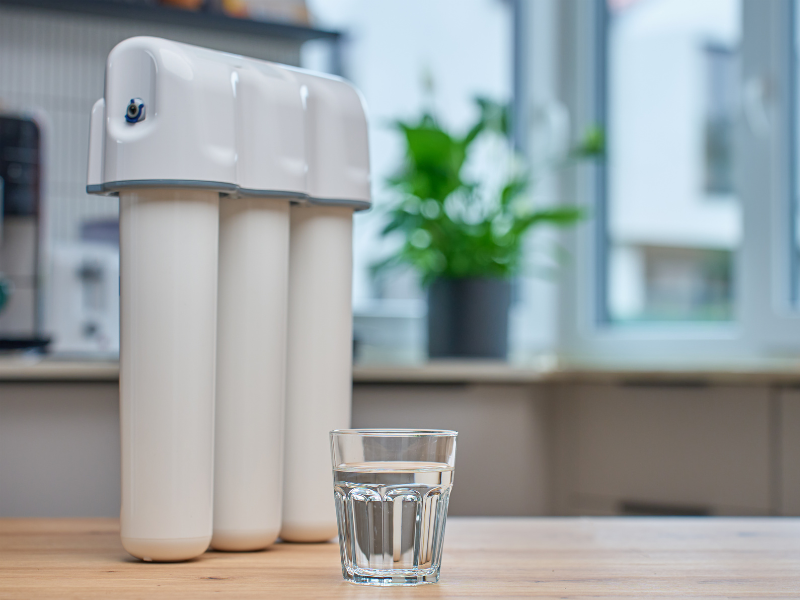
 There are dozens of water filter systems on the market, and most of them are sold with broad claims that make every product sound like the right choice. The reality is that the right system for your home depends on a handful of practical factors that have nothing to do with marketing copy. This guide walks through those factors one by one so you can narrow the field quickly and end up with something that actually suits your situation.
First, Understand What’s Actually in Melbourne’s Tap Water
Before spending money on filtration, it helps to know what you are and are not dealing with.
The Good News About Melbourne’s Water Supply
Melbourne’s water comes from protected mountain catchments and is treated to meet the Australian Drinking Water Guidelines. By global standards, it is genuinely high quality. It is soft, low in heavy metals, and consistently tested. There is no widespread contamination issue that makes a whole-house filtration system a necessity for most households. If you are buying a filter because you are worried about something dangerous in the water, that concern is largely unfounded for Melbourne main supply.
What Filters Can Genuinely Help With
What filters do meaningfully address is taste, odour, and peace of mind. Chlorine and chloramine used in the treatment process can leave a noticeable taste or smell, particularly in parts of the western suburbs. Some households prefer to remove fluoride for personal or health reasons, which requires a specific filter type. Others want to reduce sediment or microplastics, or simply want better-tasting water for drinking and cooking without relying on bottled water. These are all valid reasons to install a filter, and the right system for each goal is different.
Start With How Many People Live in Your Home
Household size directly affects how much water your filter needs to process and how quickly cartridges will exhaust themselves.
Solo Dwellers and Couples
For one or two people, daily filtered water usage is typically low enough that a benchtop filter or a basic single-stage under-sink unit handles the job comfortably. Cartridge life will be on the longer end of the manufacturer’s range, and ongoing costs remain modest. A benchtop unit is also worth considering here because installation requires no plumbing work at all, which matters if you are renting.
Families of Three to Five
A household of three to five people benefits from a multi-stage under-sink system with a higher flow rate and a larger cartridge capacity. The additional filtration stages also mean better performance across a wider range of contaminants. At this household size, cartridge replacement becomes a more regular task, so it is worth factoring that into your budget from the start.
Large Households or Heavy Cooking Use
For households of six or more, or for anyone who uses a significant volume of filtered water daily for cooking, a high-capacity under-sink system or a whole-house filter warrants serious consideration. Running a modest under-sink unit hard will exhaust cartridges quickly and potentially lead to filtration gaps if replacements are delayed. Our team regularly advises on water filter systems matched to household size across Melbourne, and the right specification makes a real difference to long-term performance.
Next, Think About What You’re Trying to Filter Out
Different contaminants require different filter media, and not all systems address all concerns.
Chlorine Taste and Smell
This is the most common reason Melbourne households install a filter, and it is also the easiest to address. A standard activated carbon block cartridge handles chlorine and chloramine effectively and is the core component of most under-sink and benchtop systems. If taste and odour are your only concern, you do not need anything more complex or expensive than this.
Fluoride Reduction
Removing fluoride requires a different media entirely. Activated carbon does not reduce fluoride to any meaningful degree. You need either a reverse osmosis system, which uses a semi-permeable membrane to remove dissolved solids including fluoride, or a specific alumina-based filter designed for fluoride reduction. RO systems are more expensive upfront and produce some wastewater as part of the process, but they are the most thorough option for households where fluoride reduction is a priority.
Sediment and Cloudy Water
Sediment filters use a physical barrier to trap suspended particles and are often installed as a pre-filter ahead of a carbon or RO stage. If your water appears cloudy or you notice fine particles, a sediment stage is worth including in your system. In Melbourne’s treated supply, heavy sediment is uncommon, but older properties with aging internal pipes can introduce particles that originate downstream of the street main.
Microplastics and Older Pipework
Concern about microplastics in drinking water is growing, and the research is still developing. A sub-micron carbon block filter or an RO membrane is currently the most effective option for reducing microplastic particles. For homes with older galvanized steel or lead-jointed pipes, an RO or high-quality carbon block system positioned at the point of use gives the best protection, since whole-house filters fitted at the entry point cannot address contamination introduced by internal pipework. Signs you may have a hidden water leak covers what to look out for.
Are You Renting or Do You Own the Place?
This question rules out an entire category of options for a significant portion of readers.
If You’re Renting
Permanent installation requires landlord permission, and not all landlords agree to plumbing modifications. A benchtop filter that sits on the counter and connects to the tap via a diverter valve is the most practical solution for renters. These units require no tools and leave no trace when you move out. Quality has improved considerably in recent years, and a good benchtop unit handles chlorine and taste concerns effectively. If your landlord does agree to a permanent install, a simple single-stage under-sink unit is the next step up, and it can be removed and reinstalled at a new property if needed.
If You Own Your Home
Ownership opens up the full range of options, from a basic single-stage under-sink unit through to a multi-stage reverse osmosis system or a whole-house filter at the point of entry. The best choice still depends on your specific concerns, your household size, and your budget, but you are not constrained by tenancy considerations. For most Melbourne homeowners whose primary goal is better-tasting drinking water, a quality multi-stage under-sink system installed by a licensed Melbourne plumber delivers the best balance of performance, convenience, and cost.
Don’t Forget the Budget, Both Upfront and Ongoing
The purchase price is only part of the picture.
What You’ll Pay to Get Started
Benchtop filters start at around $80 to $200 for a quality unit. Single-stage under-sink systems range from roughly $150 to $400 for the unit, with installation adding $150 to $300 depending on your existing plumbing setup. Multi-stage under-sink systems sit between $300 and $700 for the unit. Reverse osmosis systems typically start at $500 to $900, with higher-end units above that. Whole-house systems range from $500 for a basic sediment-and-carbon setup to over $2,000 for multi-stage configurations, plus installation. These figures are based on current Australian market averages; for an accurate quote specific to your home and plumbing setup, contact us for a free assessment.
The Real Cost Everyone Forgets: Cartridge Replacements
Ongoing cartridge costs vary considerably by system. A single-stage carbon filter cartridge typically costs $30 to $80 and lasts 6 to 12 months. Multi-stage systems require multiple cartridges replaced on different schedules, which can add up to $100 to $250 per year. RO systems have pre-filters, post-filters, and a membrane, each with its own replacement interval. Over five years, the cartridge cost often exceeds the original purchase price of the unit, so it is worth calculating the full running cost before committing to a system. Cartridge pricing varies by brand and supplier: the ranges above are indicative only.
When Spending More Actually Pays Off
A higher upfront cost is justified when the system delivers meaningfully better filtration for your specific concern, when the cartridge replacement cost is proportionally lower over time, or when the system is matched correctly to your household’s actual usage volume. Buying a cheap under-sink unit for a family of five and running it hard tends to produce worse outcomes than spending more on the right capacity from the start.
Quick Match-Up: Which Filter Suits Your Situation
Renter wanting better-tasting water: Benchtop activated carbon filter, no installation required.
Owner, one to two people, taste and odour only: Single-stage under-sink carbon block, professionally installed.
Owner, family of three to five, taste and general quality: Multi-stage under-sink system with sediment and carbon stages.
Owner, fluoride reduction is a priority: Reverse osmosis under-sink system.
Owner, large household or older home with pipe concerns: High-capacity multi-stage under-sink or whole-house system, depending on whether the concern is drinking water specifically or the full supply.
Our Honest Take Before You Buy
The best water filter is the one that matches your actual situation rather than the one with the most impressive spec sheet. For most Melbourne households, the water is already safe and the goal is taste improvement, which means a well-chosen under-sink system at a modest price point does everything that is needed. More complex and expensive systems are genuinely worth it for specific situations, but those situations are less common than the marketing suggests.
If you are unsure which system suits your home, talking to a licensed plumber before you buy saves more money than it costs. Our plumbing services team works with Melbourne homeowners and renters on water filter selection and installation regularly, and a quick conversation usually narrows the field considerably. Contact us today and we will point you in the right direction.
Recent Comments