
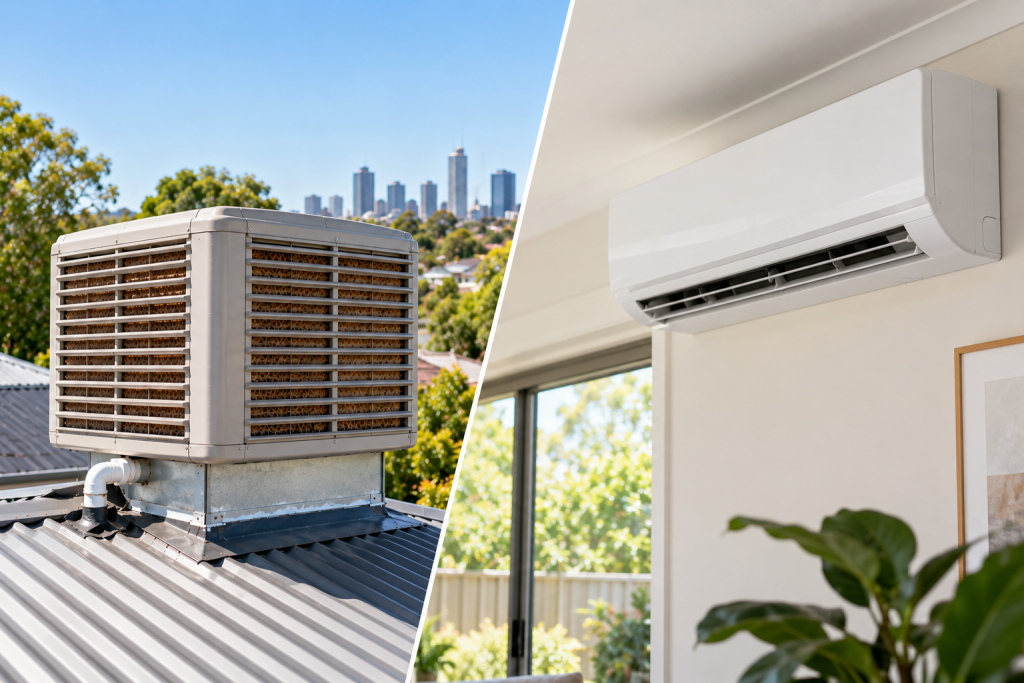
Plenty of Melbourne homes have both an evaporative cooler and a split system, and there is nothing wrong with owning the two together. The catch is that you cannot run them at the same time. Each system needs the exact opposite setup from your house to work properly, so switching one on while the other is already going will leave you paying for two systems and feeling the benefit of neither. Here is how to get the best out of both, and when to use each one, and whether your home is wired to handle the extra load.
Why These Two Systems Don’t Work Well Together
The conflict comes down to one thing: airflow. One system wants your house wide open, the other wants it sealed up tight.
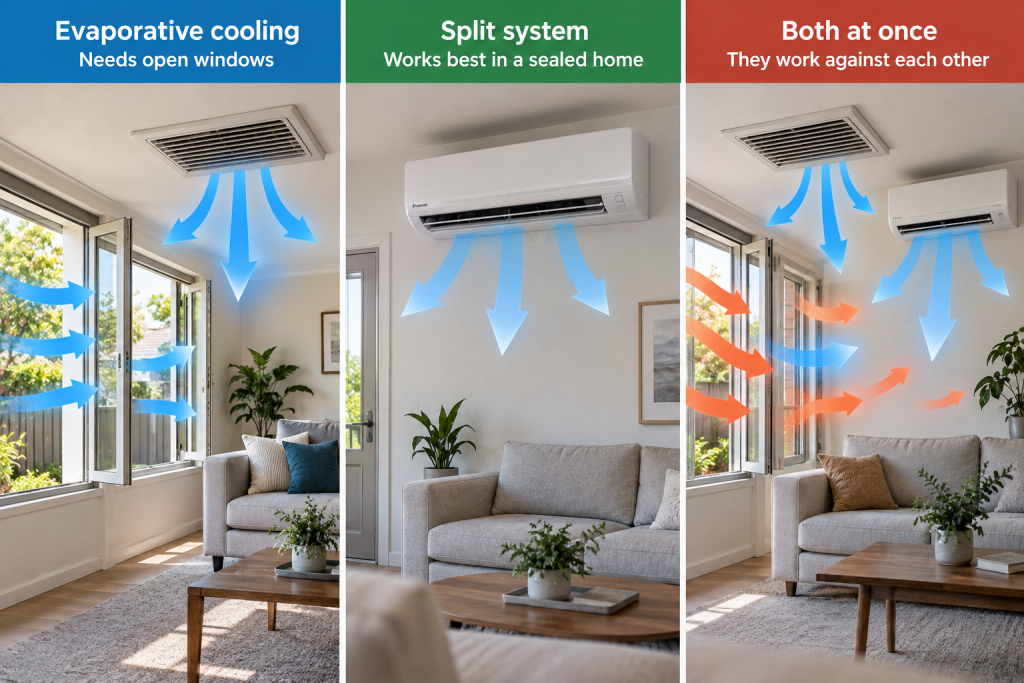
Evaporative cooling needs fresh air and open windows
An evaporative cooling system draws warm air from outside, passes it through wet filter pads, and pushes the cooled air through your home. For that fresh air to keep moving, it needs somewhere to go. According to Sustainability Victoria, some windows and internal doors need to be left open so the cooled, moist air can be pushed out of the house. Close everything up and the airflow stalls, humidity builds indoors, and the system quickly starts to feel damp rather than cool.
Split systems work best in a sealed home
A split system does the opposite. It cools and recirculates the air already inside your home, chilling it down to a set temperature on the thermostat. That only works if the cool air stays put. Leave a window open and the compressor keeps running flat out trying to chill air that is constantly escaping, which drives up your power bill and wears the unit out faster. A sealed room is what lets a split system hold a steady, comfortable temperature.
What happens if you run both at once
Put those two requirements side by side and the problem is obvious. Run them together and the evaporative cooler is forcing warm, moist outside air in through open windows, while the split system is fighting to chill and dry that same air with the doors flung open. The result is a home that feels muggy and uneven, two systems working against each other, and a bigger bill for the privilege. You get the worst of both rather than the best of either.
Which System Should You Use on a Hot Day?
The smart approach is to treat them as two tools for two different jobs, and let the weather decide which one you reach for.
Dry heat: run the evaporative cooler
On a classic dry Melbourne scorcher, when a hot northerly is blowing and the humidity is low, evaporative cooling is the better pick. It is cheaper to run, it cools the whole home rather than a single room, and it brings in a steady supply of fresh air. These systems shine when the air is dry, which is exactly the kind of heat Melbourne serves up on a lot of summer days.
Humidity, extreme heat, and smoke: run the split system
Once the humidity climbs, evaporative cooling loses its edge. The pads can’t shed heat when the air is already full of moisture, and Melbourne’s summer afternoons often get humid enough that evaporative cooling’s performance starts to drop. On sticky days, during a heatwave pushing past 40 degrees, or in the bayside suburbs, a split system air conditioner is the reliable choice because it doesn’t depend on outside conditions.
Smoky days fall into the same bucket. An evaporative cooler pulls outside air straight into your home, so it should be switched off when there is bushfire smoke around. Sealing up the house and running the split system keeps the smoke out and the air clean.
Can Your Switchboard Handle Both Systems?
Owning two systems isn’t just a comfort question; it’s an electrical one. Before you add a split system to a home that already has evaporative cooling, it’s worth checking that your switchboard can cope.
Why adding a split system increases electrical demand
The two systems draw power very differently. An evaporative cooler runs on little more than a fan and a water pump, so it’s electricity-light. A split system runs a compressor, which pulls a good deal more. Adding one to your existing setup means a noticeable jump in the electrical demand your switchboard has to carry.
What your switchboard may need
A split system generally needs:
- A dedicated circuit, so it isn’t sharing a line with other appliances
- A correctly sized circuit breaker matched to the unit
- RCD (safety switch) protection, which is required on new circuits
These are the basics that keep the install safe and compliant, and they sit on top of whatever your home is already running.
What to check in an older Melbourne home
Older homes across the inner suburbs are where this most often becomes an issue. Many still run ageing switchboards with ceramic fuses and no spare circuits to give. In that case, the board may need upgrading before a split system can go in. Switchboard and circuit work is a job for a licensed electrician rather than a plumber, so it’s worth getting that side assessed early. If you’re weighing up your options across the seasons, our overview of heating and cooling systems is a good place to start.
Is a Second System Worth It for Your Home?
For a lot of Melbourne households, the answer is yes, but it depends on how you live and what you already have.
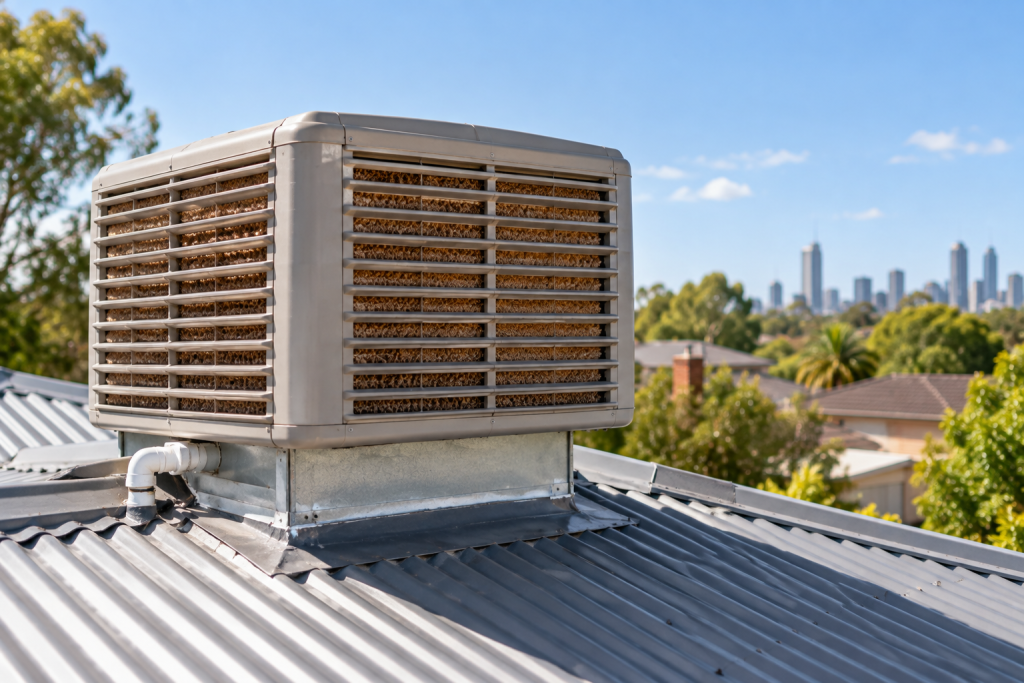
A split system works all year, an evaporative cooler doesn’t
This is the strongest case for adding a split system. A reverse cycle split system heats as well as cools, using the same outdoor unit to keep you warm right through a Melbourne winter. An evaporative cooler simply sits idle once the cold sets in. One tip if you have both: seal your evaporative cooling vents over winter, because an open roof outlet lets your heated air escape straight up through the ducts and quietly lifts your heating bill. A single split system covering the main living area, paired with whole-home evaporative cooling for summer, is a combination that earns its keep across all four seasons.
When one system is enough
Sometimes a second system is more than you need. Apartments, homes with tricky roof access, and rental properties are often better served by a single, well-matched system. If your existing setup keeps you comfortable on all but a handful of days each year, the cost of adding and running a second system may not stack up. An honest assessment of your home is the best way to know for sure.
Every home is different, and the right answer depends on your layout, roof access, and existing ductwork. The team at 24Hour Melbourne Plumbers can assess your home, talk you through your options, and give you an honest quote with no pressure. We’re licensed, backed by our workmanship guarantee, and available 24 hours a day, seven days a week across Melbourne. Get in touch with us today to find the setup that suits your home and keeps you comfortable all year round.
Recent Comments