

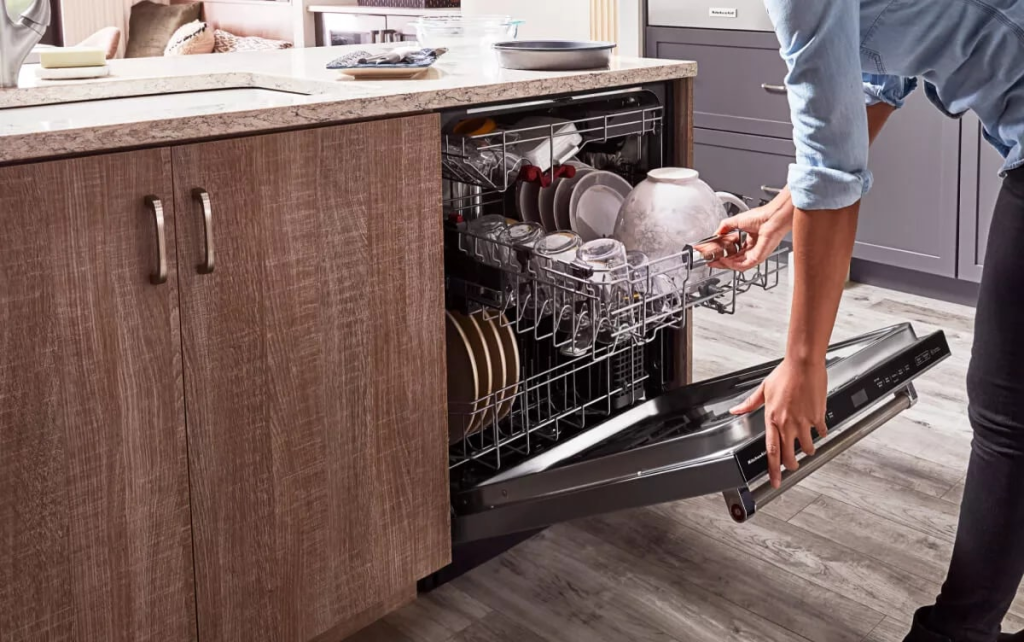
Freestanding, integrated, and benchtop dishwashers all wash dishes the same way, but the type chosen affects installation complexity and repair access. The right pick depends on the plumbing involved and on whether it’s going into a Melbourne apartment, a family home, or a rental.
Freestanding vs Integrated vs Benchtop Dishwashers at a Glance
Before getting into the details, here’s how the three types stack up on the things that matter most for installation and upkeep.
Freestanding Dishwashers: Easiest to Install and Replace
Freestanding dishwashers connect to your existing water supply and drain without any modification to cabinetry. For a plumber, that typically means tapping into the under-sink cold water line and existing drain, which is quick work compared to fitting an integrated unit.
Because the unit stands on its own, replacing it later is simple: no cabinetry to unscrew and no custom panel to match. That makes freestanding dishwashers a practical choice for renters, since no cabinetry is cut or permanently modified, and for homeowners who want to upgrade without a renovation. That makes freestanding dishwashers a practical choice for renters, since no cabinetry is cut or permanently modified, and for homeowners who want to upgrade without a renovation. The trade-off is that it’s visible, so it won’t blend into your cabinetry.
If you’re replacing an existing freestanding unit, the tap and drain point are usually already in place from the original installation, so swapping one unit for another is typically a same-day job. The main things worth checking are the condition of the isolation valve and whether the new unit’s hose lengths reach without strain, since replacing cracked or undersized hoses now is far cheaper than dealing with a slow leak later.
Built-In and Integrated Dishwashers: Best Look, Harder to Fix
Integrated dishwashers sit behind a cabinetry front matched to your kitchen joinery, so at a glance you can’t tell a dishwasher is there. That seamless finish asks more of the installation: a plumber usually works alongside your cabinet maker or installer to fit the unit into its cavity, connect the plumbing and align the door panel with the surrounding cabinets.
It’s worth knowing the trade-off upfront. If something goes wrong later, such as a leaking hose or a failed pump, a tradie may need to remove the cabinetry panel just to get access, which adds time (and cost) to what would otherwise be a routine repair. Integrated units work best when appearance matters more than ease of future servicing.
Timing also matters more with integrated units. The cabinetry cut-out needs to match the dishwasher’s exact dimensions before the surrounding panels go on, so the plumbing and electrical work usually has to be locked in before a kitchen renovation gets too far along. Leave it too late and you’re either waiting on a resized cut-out or working around cabinetry that’s already fixed in place.
Benchtop Dishwashers: A Compact Alternative
A benchtop dishwasher is the smallest and simplest of the three. It sits on your counter and connects to the kitchen tap using a diverter valve rather than fixed plumbing, which is why it needs so little setup compared with the other two types.
That makes it a popular option for studio apartments, share houses, and rentals where permanent plumbing changes aren’t an option, or for anyone who doesn’t have the room, or the need, for a full-size unit. The catch is capacity: benchtop models hold far fewer dishes per cycle, so they suit one or two people rather than a full household.
A benchtop unit plugs into a standard power point, so an electrician is rarely needed. Check the model’s place-setting capacity before you buy. Capacity-wise, expect to fit around six place settings at a time, meaning more frequent cycles for a larger household.
Choosing the Dishwasher That Suits Your Home
Where you live, and how long you’ll be there, usually settles it.
- Melbourne apartments and rentals: A freestanding or benchtop dishwasher makes the most sense, since both are easy to take with you (or remove without a trace) when the lease ends.
- Family homes: An integrated dishwasher is worth the extra installation complexity if you’re renovating the kitchen anyway, because the plumbing and cabinetry work happens in one go. If you’re not renovating, a freestanding unit gets you the same function without pulling cabinetry apart.
- Older Melbourne homes: Have your existing plumbing checked before committing to an integrated unit, as older water lines and drains sometimes need upgrading to meet the dishwasher’s requirements, which is easier to plan for upfront than to discover mid-installation.
If you’re renting, check with the property manager or landlord before installing anything beyond a plug-in benchtop unit. Integrated and even some freestanding installations can count as a fixture change under a lease, and getting sign-off first avoids a dispute over bond deductions when you move out. Whichever type you choose, the installation details below are worth checking before you buy.
Dishwasher Installation in Melbourne
Whichever type suits your kitchen, a correctly installed dishwasher comes down to the same things: a properly sized water connection, a drain that won’t back up, and (for integrated units) cabinetry that’s been prepared to the manufacturer’s specifications.
Manufacturer warranties typically require installation by a licensed professional, and a poor water or drainage connection can put a claim at risk. A correct installation protects both the manufacturer’s warranty and any workmanship guarantee on the job.
Our plumbers handle dishwasher installation across Melbourne homes and apartments, from a straightforward freestanding swap to a full integrated fit-out as part of a kitchen renovation. If you’re not sure which type suits your space, contact us and we’ll talk you through the options before you buy.
Recent Comments