

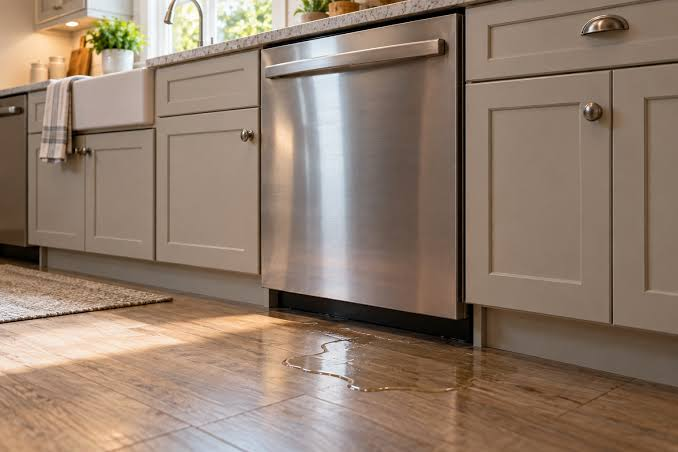
Finding a pool of water on your kitchen floor is never a great start to the day. Before you assume the worst, it helps to know that most dishwasher leaks come down to a handful of common causes, and where the water is coming from is usually the biggest clue. Here’s how to work out whether your leak is coming from the door or from underneath, what you can safely check yourself, and when it’s time to call a plumber.
Leaking From the Door
If water is pooling in front of the unit or seeping out around the door itself, the cause is usually one of the following.
Damaged or Worn Door Gasket
The gasket is the rubber seal running around the edge of the dishwasher door, and its whole job is keeping water inside the tub during a cycle. Over time, food residue and detergent buildup wear it down, and once it’s cracked or loose, water finds its way straight out the front.
Loose or Faulty Door Latch
The latch holds the door firmly shut while the cycle runs. If it’s loose, bent, or not catching properly, the door won’t seal completely, and you’ll usually notice the dishwasher feels easier to open than it should while it’s running.
Wrong Detergent Causing Suds to Overflow
Regular dishwashing liquid creates far more suds than dishwasher detergent is designed to handle. Those extra suds build up pressure inside the tub and force their way out around the door seal, which can look like a leak even when the gasket and latch are both fine.
Leaking From the Bottom
If the water is showing up under the unit rather than at the front, the cause is usually mechanical rather than related to the door.
Clogged or Damaged Drain Hose
The drain hose carries wastewater out of the dishwasher during the drain cycle. Food particles and grease can clog it over time, and cracks or loose clamps let water escape before it even reaches the drain.
Faulty Water Inlet Valve
The inlet valve controls how much water enters the tub at the start of each cycle. If it’s stuck open or damaged, it can let in too much water, or let water in even when the dishwasher isn’t running, and the overflow ends up underneath the unit.
A Malfunctioning Pump or Worn Pump Seal
The pump circulates water through the wash cycle and drains it out afterwards. A worn seal around the pump housing is a common source of leaks that seem to come from nowhere in particular, since the pump sits underneath the tub, out of sight.
Cracked or Worn Tub
On older units, the tub itself can develop small cracks or worn spots, particularly near the base. Minerals and detergent residue can corrode the surface over years of use, and once the tub is compromised, water seeps through no matter how well everything else is working.
Other Common Causes
Not every leak fits neatly into the door-or-underneath split. A couple of other common culprits are worth checking too.
An Unlevel Dishwasher
If the unit isn’t sitting level, water can pool to one side of the tub and find its way out through gaps that wouldn’t normally be a problem. Most dishwashers have adjustable feet at the front, and you can check levelling by placing a spirit level on the open door or the bottom rack rail, then adjusting the feet until it sits centred. This is easy to overlook since it doesn’t point to a faulty part at all, just an installation issue.
A Drainpipe Positioned Below the Sink Drain
Dishwasher drain hoses are meant to run in a high loop or connect to an air gap positioned above the level of the sink drain. This prevents wastewater from flowing back into the dishwasher from the sink, rather than down the drain, which can lead to overflow. Getting this wrong is a common issue with DIY installs, and it’s more of an installation problem than a fault with the appliance itself.
Quick Fixes You Can Try First
There are a few things you can check yourself before calling anyone. Confirm you’re using dishwasher-specific detergent, not regular dishwashing liquid, and that you’re not overfilling the detergent cup. Using a spirit level, check that the unit is sitting level, and adjust the feet if it isn’t. Have a look at the filter at the base of the tub for trapped food or debris, and clear it if needed. Wipe down the door seal and check for anything caught in it, like cutlery or food scraps, that might be stopping the door from closing properly.
Signs You Need a Professional
If you’ve tried the checks above and the leak hasn’t stopped, it’s time to call a plumber. A cracked tub, a damaged gasket or latch, a faulty inlet valve, or a pump seal issue all require the right parts and tools to fix properly, and getting them wrong can make the problem worse. The same goes for drainpipe positioning, since that’s usually tied to how the dishwasher was originally installed rather than something you can adjust yourself.
Stop the Leak From Coming Back
A leak that keeps returning even after you’ve checked everything above is often a sign the original installation wasn’t quite right, rather than a one-off fault. Our team can properly diagnose the cause and fix it at the source. If you’re after a fresh installation done right the first time, our dishwasher installation page has more on how we handle it, and our appliance installation page covers the rest of the kitchen appliances we install too.
Recent Comments