
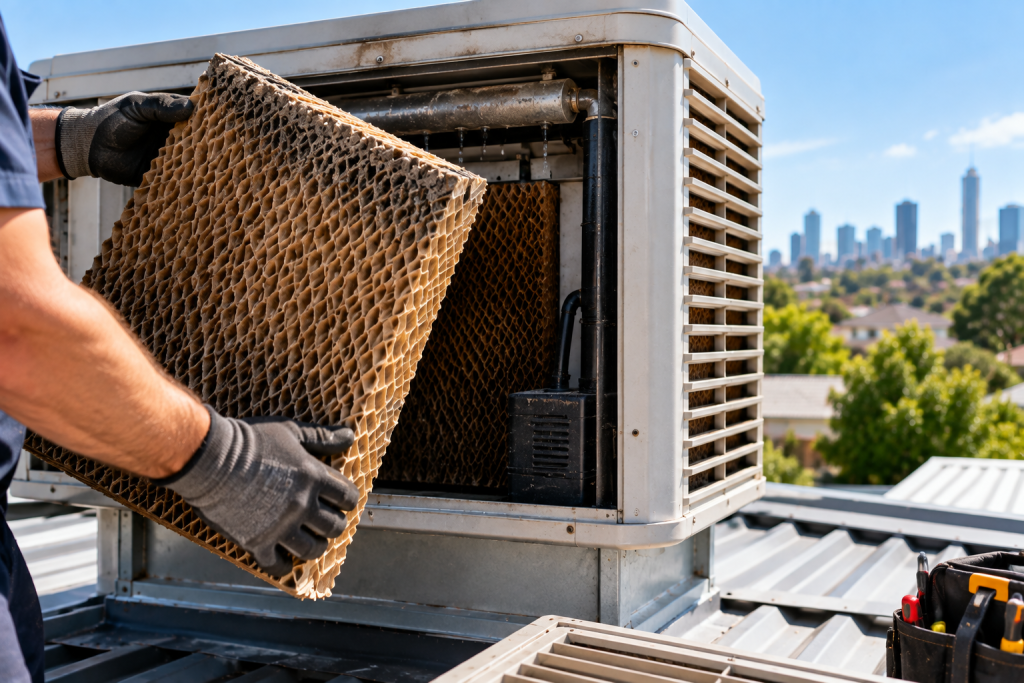
Your evaporative cooler used to knock the heat out of a 35-degree Melbourne day without any trouble, but lately it just isn’t cutting through the way it should. Before you assume the whole unit needs replacing, it’s worth checking one part first: the cooling pads. These do most of the actual cooling work, and they wear out well before anything else in the system. Some problems just need a clean. Others mean the pads have reached the end of their working life. Here’s how to tell which is which, and what Melbourne’s water has to do with it.
What Cooling Pads Do and Why They Wear Out
Evaporative cooling pads are honeycomb-textured panels that water trickles down through while a fan pulls hot, dry outside air across them. As the air passes through the wet surface, the water evaporates and takes the heat with it, which is what sends cool air through your home.
That constant wetting-and-drying cycle is exactly what wears the pads down over time. Every time water evaporates off the surface, anything dissolved in that water, along with airborne dust, pollen and general grime, stays behind. Add a roof-mounted unit sitting in direct sun through a Melbourne summer, and the pads are working hard in tough conditions for months at a stretch.
Signs Your Pads Need Cleaning
Most early-stage problems come down to buildup rather than actual damage, and cleaning is usually enough to bring performance back.
Mineral Deposits and Calcium Buildup
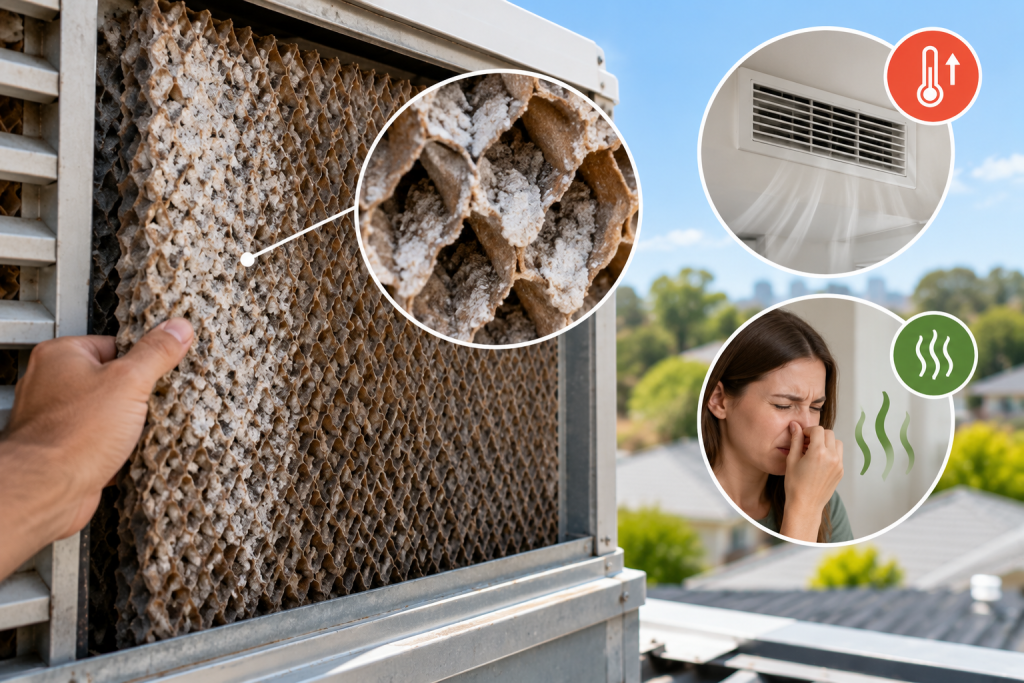
Melbourne’s water isn’t among the harder supplies in Australia, but it still carries enough dissolved minerals to leave a mark over time. Run through a cooling pad for weeks on end, those minerals build up into a visible white or grey crust on the surface. As that crust hardens, it blocks the very surface the system relies on for evaporation, and the pad simply can’t do its job as well.
Reduced Cooling Performance
This is usually the first thing homeowners notice: the unit is running, but the air coming out feels warm, weak, or humid rather than genuinely cool. When a pad is clogged with dust or mineral deposits, airflow through it drops and evaporation slows down, so you get a fraction of the cooling you’d normally expect.
Musty or Unusual Smell
A damp pad sitting in low airflow between uses gives mould and bacteria exactly the conditions they need to take hold, and that shows up as a musty smell when the unit first kicks on. On its own, this isn’t usually a serious issue, but it’s a clear signal the pad needs cleaning and proper drying rather than being left as is.
Signs Your Pads Need Full Replacement
Sometimes a clean isn’t enough, and the pad itself has reached the end of its usable life.
Visible Deterioration, Fraying, or Brittleness
A physical check tells you a lot. If the pad material is crumbling, tearing at the edges, or the honeycomb structure has started collapsing in on itself, water can no longer spread evenly across the surface. Cooling becomes patchy at best, no matter how clean the rest of the unit is.
Cleaning No Longer Restores Performance
If you’ve already given the pads a proper clean and performance still hasn’t improved, or the mineral buildup has hardened to the point it won’t come off, that’s the clearest sign a clean won’t fix this. At that stage, replacement is the only option that actually restores cooling.
Cellulose vs Synthetic Pads: Different Lifespans
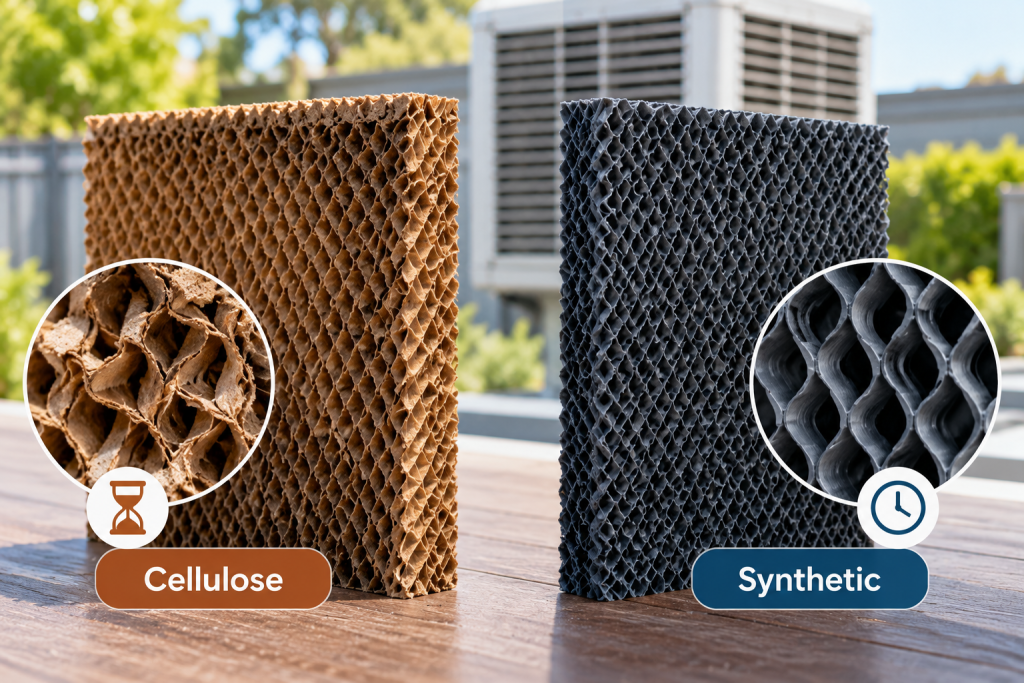
Not all cooling pads are built the same, and the material affects how often you’ll be dealing with this. Cellulose pads are the more common, lower-cost option, but they tend to wear out and need replacing more frequently, particularly in a system exposed to Melbourne’s mineral content and dust over multiple summers.
Synthetic pads generally hold up better against mineral buildup and general wear, and tend to have a longer working life as a result, though they typically cost more upfront. Neither option is maintenance-free. The choice mostly comes down to whether you’d rather pay less now and replace more often, or spend more upfront for a pad that goes the distance.
Cleaning Your Pads Yourself vs Calling a Technician
Some of this is genuinely safe to check yourself. Other parts are better left to someone who does it for a living.
What’s Safe to Check and Clean at Home
With the unit switched off, you can usually check the pads for visible dust, debris or buildup, and give the exterior surface a gentle rinse with low-pressure water to clear off light grime. It’s also worth checking the water distribution tray above the pads for any obvious sludge or blockage, since that affects how evenly water reaches the pad in the first place.
When It’s a Job for a Professional
Removing the pads entirely or working safely on a roof-mounted unit is best left to a licensed technician. The same goes for figuring out whether the real issue is the pad at all, rather than the water pump or a stuck float valve. It’s also the only reliable way to know whether you’re looking at a cleaning job or a genuine replacement, rather than guessing and paying for the wrong fix.
The Health Risks of Neglecting Your Pads
Beyond weaker cooling, a neglected pad has a genuine air quality downside. Damp, organic pad material, especially cellulose, becomes an easy target for mould and bacteria if it’s left dirty and constantly re-wetted without ever being properly cleaned or dried out.
Since the whole point of the system is blowing air through that pad and into your home, anything growing on it can end up circulating through your living space too. That’s worth taking seriously if anyone in the house deals with allergies or asthma. Routine cleaning is a straightforward way to keep this from becoming an issue in the first place, rather than something that needs a bigger fix down the track.
If your cooler still isn’t performing well after a proper pad clean, or you’re not sure whether you’re looking at a clean or a replacement, it’s worth getting it checked properly rather than guessing. Our team can assess your evaporative cooling system and advise honestly on what it actually needs. Get in touch with us to book a service, or head to our evaporative cooling page for more on the system itself. We also service other heating and cooling appliances your home may rely on.
Recent Comments