

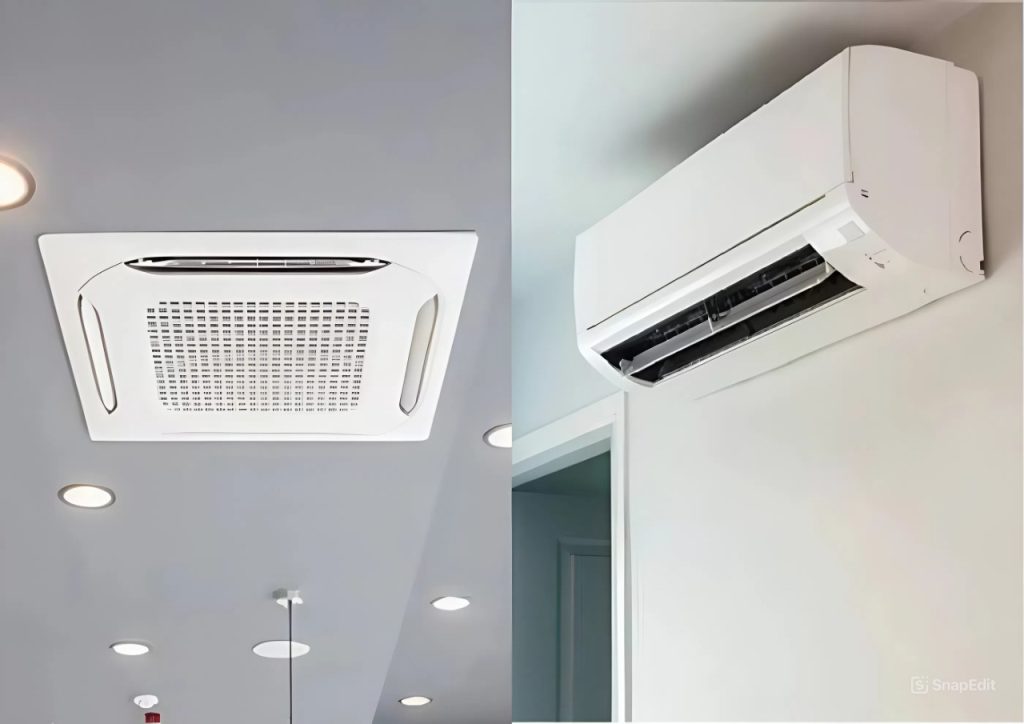
When it comes to heating and cooling a Melbourne home, most homeowners are choosing between a reverse cycle split system and ducted air conditioning. Both work well. The question is which one suits your specific situation, and the honest answer is not always the more expensive option.
This guide covers the key differences: upfront cost, running costs, installation, and how each performs through Melbourne’s summers and winters, so you can make the right call before committing.
The Core Difference Between Ducted and Split System Air Conditioning
A ducted system uses a central unit in the roof space to distribute conditioned air through ceiling vents across multiple rooms, with zoning controls to manage different areas independently.
A reverse cycle split system pairs one outdoor unit with one indoor wall unit to condition a single room or open-plan area. A multi-head split system connects one outdoor unit to multiple indoor units across separate rooms, giving room-by-room control without the ductwork.
Both systems heat and cool using refrigerant-based technology. The difference comes down to scale, cost, and how conditioned air reaches each room.
How They Compare: Cost, Installation, and Performance in Melbourne
Upfront Cost: Split System vs Ducted
The cost gap between the two systems is significant.
A single reverse cycle split system is the most accessible starting point. A multi-head split system serving two or three rooms costs more but remains considerably below what a fully installed ducted system costs for the same home.
Ducted air conditioning involves a central unit, ductwork through ceiling cavities, vents in every room, and zoning controls. The materials and complexity make it a substantially higher upfront investment. For a larger home where whole-house conditioning is the goal, that cost can be justified. For a two-bedroom apartment or a smaller home where only two or three rooms are regularly used, it rarely is.
Running Costs: Which Is Cheaper to Operate?
For most Melbourne households, a reverse cycle split system is cheaper to run day to day.
A split system only conditions the space it serves. A ducted system, unless carefully zoned, conditions the whole home simultaneously — including rooms no one is in. Gas ducted heating introduces another variable: running costs depend on gas tariffs relative to electricity rates, and that balance shifts over time. A reverse cycle split system with modern inverter technology adjusts output to match demand, making it typically more efficient per unit of heat delivered than a gas ducted system.
For households that use most rooms at the same time, a well-zoned ducted system can close the gap. For everyone else, the split system advantage is real.
Installation and Disruption
A standard split system aircon installation takes two to four hours. The installer mounts the indoor unit, positions the outdoor unit, runs the refrigerant lines and electrical connections through the wall, and tests the system. No roof access, no ductwork, no structural work.
Ducted installation is a different job. The central unit goes into the roof space, ductwork is routed through ceiling cavities, and vents are cut into ceilings throughout the home. It is best suited to new builds or major renovations where ceilings are already open.
For renters, a split system requires landlord consent for the wall penetration, a straightforward request that most landlords approve. Ducted installation involves far more invasive work and is rarely approved for a rental property.
If you are planning an installation, knowing when to book to avoid Melbourne’s peak-season wait times can make the process significantly smoother.
Performance in Melbourne’s Climate
Melbourne summers bring sustained stretches of 38-40°C heat, and winters are genuinely cold, with overnight temperatures regularly below 5°C.
A reverse cycle split system handles both extremes efficiently, removing heat in summer, extracting it from outdoor air in winter. This is why it is the standard choice for Melbourne apartments and smaller homes.
Gas ducted heating performs well for whole-home warmth in winter but only heats, meaning a separate cooling solution is still needed for summer. Ducted refrigerated cooling handles both seasons through the same system, but at the full upfront cost of a ducted installation.
Which Option Is Right for Your Situation?
For most Melbourne apartments and smaller homes, a quality reverse cycle split system outperforms ducted air conditioning on every practical measure: lower upfront cost, lower running costs, and simpler installation. It is not a criticism of ducted systems; it is simply the reality for the majority of Melbourne households.
Ducted makes sense for larger homes of four or more bedrooms where whole-home conditioning is needed simultaneously, or in new builds and major renovations where ductwork can be installed before ceilings are closed.
A split system suits you if:
- You are in an apartment, townhouse, or home with three bedrooms or fewer
- You primarily use one to three rooms at a time
- Lower upfront and running costs are a priority
- You want a single system that heats and cools without major installation work
Ducted air conditioning suits you if:
- You have a larger home and want consistent whole-home comfort
- You are building or undertaking a major renovation
- You want a discreet system with no wall-mounted units
- Budget is not the primary constraint
Our heating and cooling services cover the full range of systems we work with, and if you are considering a gas ducted system, our ducted heating installation has more detail on what the process involves.
When you are ready to move forward, our team installs and services both split systems and ducted systems across all Melbourne suburbs, 24 hours a day, seven days a week. Call us any time to discuss the right system for your home.
Frequently Asked Questions
Which is cheaper to run, ducted or split system air conditioning?
For most households, a reverse cycle split system is cheaper to run. It only conditions the space being used, while ducted systems condition the whole home. The gap narrows for larger homes where most rooms are in use at the same time.
Can a reverse cycle split system both heat and cool?
Yes. A reverse cycle split system heats in winter and cools in summer using the same unit, making it the most practical choice for Melbourne’s climate.
Is ducted air conditioning worth it for a 3-bedroom Melbourne home?
In most cases, no. A multi-head split system serving the main living area and bedrooms will cost less to install and run, with comparable comfort. Ducted becomes more justifiable for larger homes or as part of a new build.
Do renters need permission to install a split system?
Yes. A split system installation involves a wall penetration and requires landlord consent. It is a reasonable and commonly approved request, but get written agreement from your rental provider before proceeding.
What is the difference between a split system and a multi-head split system?
A split system pairs one outdoor unit with one indoor unit for a single room. A multi-head split system connects one outdoor unit to multiple indoor units across different rooms, giving independent control in each space without ducted infrastructure.
Recent Comments